For coastal and urban commercial buildings, late winter and early spring can be the critical window for preventing rooftop gull problems.
You may already be seeing them.
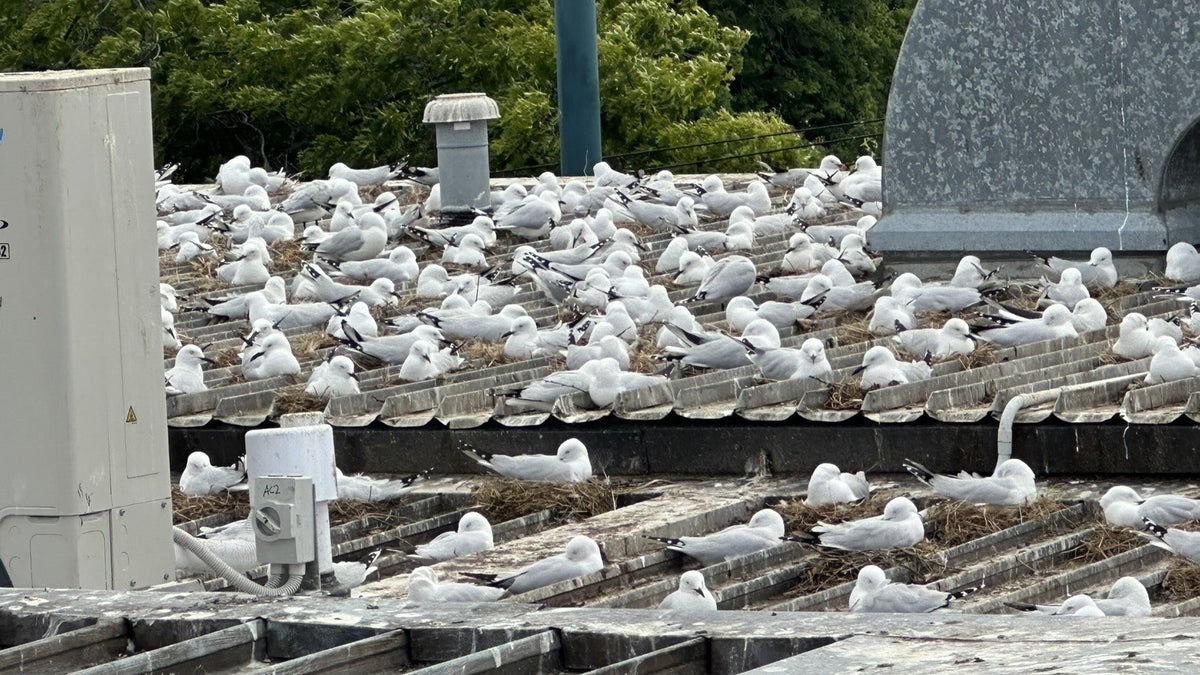
Gulls circling commercial buildings. Landing on rooftops. Sitting on the same areas during the day. Checking out flat roofs and other elevated spaces.
They may not be nesting yet.
But they could be deciding whether your roof is their next home.
The rooftop inspection is already underway
As spring approaches, gulls begin investigating potential breeding sites. For building owners and pest control professionals, this period provides an important opportunity: the birds are present, but they haven't necessarily committed to the site yet.
This is when preventative bird control can be most effective.
DOC has previously advised New Zealand building owners to act before gulls settle in for the breeding season, specifically warning that once protected gulls begin nesting, they cannot simply be moved.
Why waiting can make the problem harder
Once gulls begin repeatedly using a rooftop, they can become increasingly attached to the site.
Daytime visits can progress to regular resting and overnight activity, followed by nesting behaviour as the breeding season gets underway.
By late September and early October, nesting activity can begin in some locations and species. The exact timing varies, but spring and summer are generally the key breeding period for New Zealand's gulls.
Once a protected species has established a nest, there are legal restrictions around disturbing the birds or their nests. Red-billed gulls/tarāpunga and black-billed gulls/tarāpuka are protected under the Wildlife Act, while protection varies between gull species.
That's why prevention matters.
The goal isn't to remove an established colony.
It's to make the rooftop an unattractive place to settle in the first place.
What happens when gulls take over a rooftop?
A gull colony isn't just a noise nuisance.
Gulls can create a range of practical problems for commercial buildings, including:
Blocked gutters and drainage
Nesting material and accumulated debris can obstruct gutters and drainage systems. DOC has specifically warned that gull nests can clog gutters and lead to expensive repairs.
Guano and contamination
Large numbers of birds can quickly cover rooftops, equipment, walkways and surrounding areas with droppings. Rooftop gull colonies have been documented in New Zealand town centres, leaving significant amounts of guano around businesses and buildings.
Noise and disruption
Gulls aren't exactly quiet tenants. Established colonies can create persistent squawking and disturbance for people working in or around the building.
Maintenance and cleaning costs
Once birds establish a regular presence, businesses may face increased cleaning, gutter maintenance and roof-management requirements.
And the longer the birds successfully use a site, the more difficult it can be to change that behaviour.
What should building owners do now?
If you're responsible for a coastal or urban commercial property, don't wait until you see a nest.
1. Check the roof
Look for areas where gulls are repeatedly landing, sitting or gathering.
2. Watch their behaviour
A few birds passing over the building is different from birds repeatedly returning to the same rooftop areas.
Pay particular attention to birds beginning to spend longer periods on the roof or returning regularly.
3. Look for signs of nesting activity
Check for nesting material, debris or areas that appear to be becoming established as resting or nesting locations.
4. Put deterrents in place early
The objective is to discourage gulls while they are still deciding whether your rooftop is a suitable site.
Different buildings and bird pressures require different approaches, so a site assessment is often the best starting point.
Read Guide - How to Keep Gulls Off Your Roof
5. Don't wait until nesting has started
This is perhaps the most important point.
The easiest gull problem to manage is the one you prevent from becoming a nesting problem.
Act before they settle.
Think of it as the rooftop equivalent of putting up a “No Vacancy” sign.
Gulls are already checking out potential sites.
If they're repeatedly visiting your roof, don't wait for them to unpack.
Birdzout provides humane bird deterrent solutions for commercial and industrial environments, including automated laser systems and other bird control technologies designed to discourage birds from settling and roosting.
Need help with a rooftop gull problem?
Talk to Birdzout about the right solution for your site.