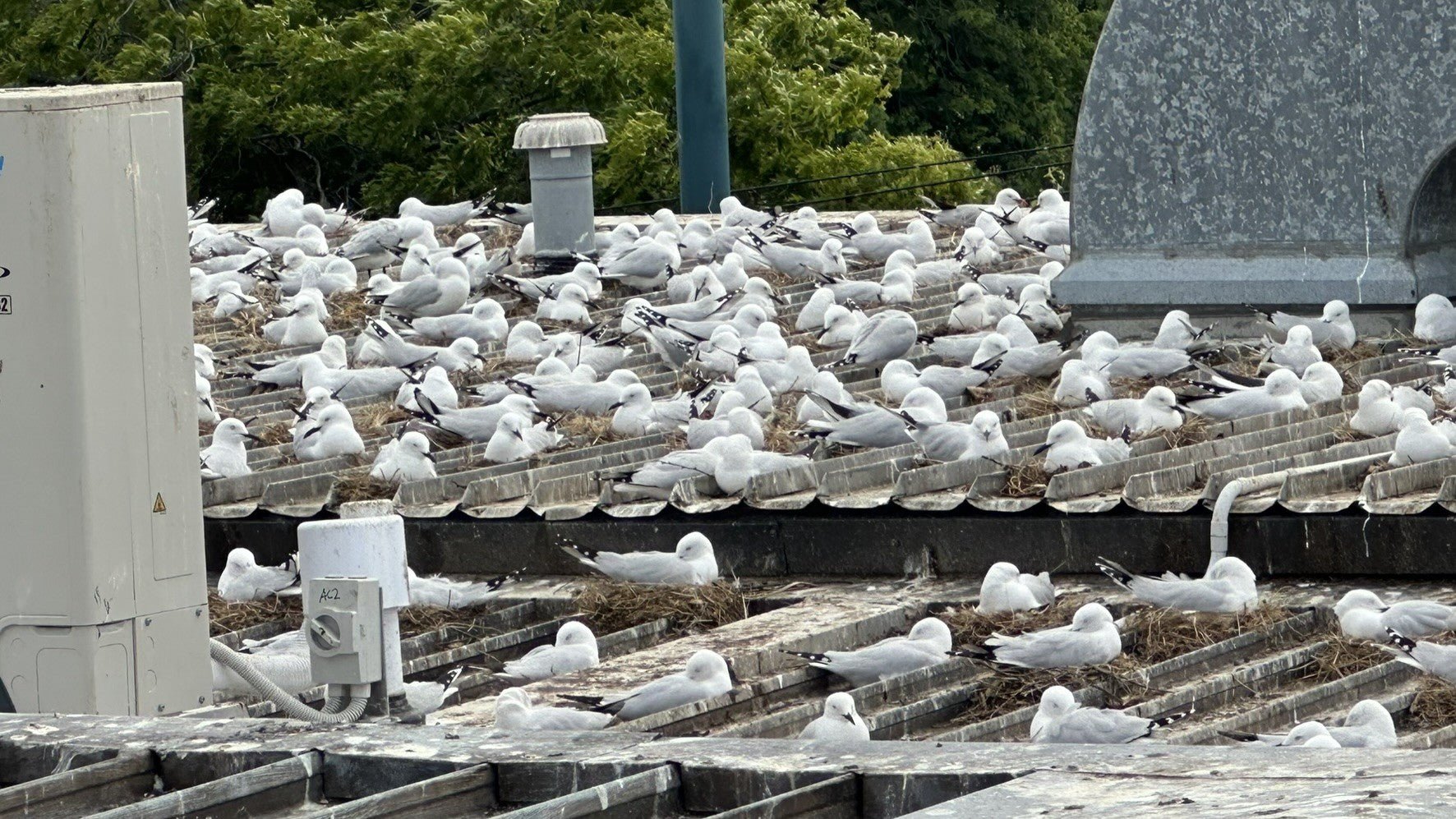

Spring is when things start changing and bird behaviour is no exception.
As spring arrives across the Southern Hemisphere, many bird species enter breeding season. Birds begin pairing up, establishing territories and looking for reliable places to feed, roost, shelter and nest.
For businesses, growers, industrial sites and property managers, this can be the point where occasional bird activity starts developing into a bigger problem.
The key is to get ahead of it before birds become established.
Why is spring an important time for bird control?
Spring brings a shift in bird behaviour.
Birds become more active as they establish territories and breeding sites. They are looking for food, water, shelter and safe places to nest. Buildings, industrial facilities, farms, orchards and other commercial properties can all provide what they need.
A site that offers reliable food, shelter or a safe place to roost can quickly become part of a bird's regular routine.
And once birds have established a pattern, changing their behaviour can become more difficult.
That's why spring is an ideal time to assess bird activity and put a proactive bird control strategy in place.
Don't wait until birds become a problem
One of the biggest mistakes in bird control is waiting until the problem becomes obvious.
By the time you are dealing with large numbers of birds, nesting, heavy fouling or crop damage, birds may already have established the site as a reliable source of food or shelter.
Instead of asking:
"How do we get rid of these birds?"
A better question is:
"How do we stop them establishing here in the first place?"
Early intervention gives you more opportunity to influence bird behaviour before pressure increases.
Birds aren't just looking for food
When we think about pest birds, it's easy to focus on food.
But spring changes the equation.
Breeding birds are also looking for:
- Safe nesting locations
- Shelter from weather and predators
- Reliable roosting areas
- Water
- Food sources
- Suitable territories
That can make a wide range of locations attractive, including:
Commercial buildings
Roofs, ledges, loading areas, plant rooms and sheltered spaces can provide attractive roosting and nesting locations.
Bird fouling can create cleaning and maintenance costs, affect building appearance and create hygiene concerns.
Industrial sites
Warehouses, factories, processing facilities, waste sites and other industrial environments can provide food, shelter and elevated roosting locations.
Bird activity can create contamination, maintenance and operational challenges.
Agricultural properties
Crops, livestock facilities, sheds, shelter belts and other farm infrastructure can all form part of a bird's habitat.
For growers, the consequences can include crop damage and reduced yield.
Transport and infrastructure
Airports, ports, marinas, rail infrastructure and other large sites can attract birds because of their open spaces, food sources and sheltered areas.
For these sites, bird management can also be an important part of operational and safety planning.
Look at the whole site
Effective bird control starts with understanding why birds are attracted to a location.
Don't just look at where you see birds.
Look at the wider site and ask:
Where are they coming from?
Where are they feeding?
Where are they roosting?
Where could they be nesting?
Where are they finding shelter?
What is attracting them to the site?
For agricultural properties, this may include surrounding vegetation, hedgerows and shelter belts.
Research from New Zealand's Foundation for Arable Research found that areas with higher populations of problem birds during one breeding season tended to have higher populations the following year. Higher breeding-season bird populations were also associated with hedgerows and shelter belts.
For commercial and industrial sites, the same principle applies: understanding the surrounding environment can help identify where bird pressure is coming from and where birds are establishing themselves.
Spring bird control checklist
Spring is a good time to review your site and ask:
1. What birds are present?
Identify the species you're dealing with.
Different birds have different behaviours, habits and responses to deterrents.
2. Where are birds spending their time?
Look for regular landing, roosting, feeding and nesting locations.
3. What is attracting them?
Consider food, water, shelter, nesting opportunities and nearby habitat.
4. Has bird activity increased?
Compare what you're seeing now with previous seasons.
5. Are birds becoming established?
Repeated use of the same areas can be an early warning sign that birds are developing a routine.
6. Is your existing bird control ready?
Check that deterrent systems are operational, correctly positioned and suitable for the season ahead.
7. Do you need a broader strategy?
Birds can adapt to repeated deterrents. Depending on the site and level of pressure, a combination of complementary bird control methods may provide a more effective solution.
Why proactive bird control matters
The goal of bird control isn't simply to react when birds arrive.
It's to manage bird pressure before it becomes difficult or expensive to control.
A proactive approach can help:
- Reduce the likelihood of birds establishing regular routines
- Protect crops and valuable assets
- Reduce fouling and contamination
- Minimise cleaning and maintenance
- Reduce disruption to operations
- Address bird pressure before peak periods
- Give you time to monitor and adjust your strategy
This is particularly important during spring, when bird behaviour is changing and breeding activity is increasing.
Should you use more than one bird deterrent?
There isn't a single bird control solution that works for every site.
The right approach depends on the species, environment, pressure level and objective.
Depending on the situation, bird control may include:
- Laser deterrents – using moving light to discourage birds from landing and roosting
- Bioacoustic deterrents – using distress, predator or harassment sounds
- Visual deterrents – using movement or visual cues to discourage birds
- Physical exclusion – preventing birds from accessing specific areas
- Roost deterrents – making surfaces less attractive for landing or perching
Combining complementary methods can help create a broader deterrence strategy, particularly where bird pressure is persistent.
Monitor, adjust and stay ahead
Bird control shouldn't necessarily be a set-and-forget exercise.
Bird behaviour can change throughout the season.
A site that has relatively low pressure in early spring may experience significantly more activity later as breeding progresses, food sources change or young birds enter the population.
Regular monitoring helps identify those changes early.
See more birds? See them using different areas? Notice new roosting or nesting activity?
That's the time to reassess your strategy, before the problem escalates.
Don't let spring catch you off guard
Birds are highly adaptable.
Once they've found somewhere that provides food, shelter or a safe place to breed, they have good reason to keep coming back.
Spring is your opportunity to get ahead of that behaviour.
Don't wait until birds are nesting, roosting, fouling equipment or damaging crops to start thinking about bird control.
Assess early. Act early. Stay ahead.
Get ahead of the flocks
Birdzout provides smart, humane bird control solutions for agricultural, commercial, industrial and infrastructure environments.
From automated laser systems and bioacoustics to visual deterrents and bird proofing, our team can help identify an approach suited to your site and bird pressure.
Get in touch with the Birdzout team today to get ahead of the flocks.
Contact Birdzout