
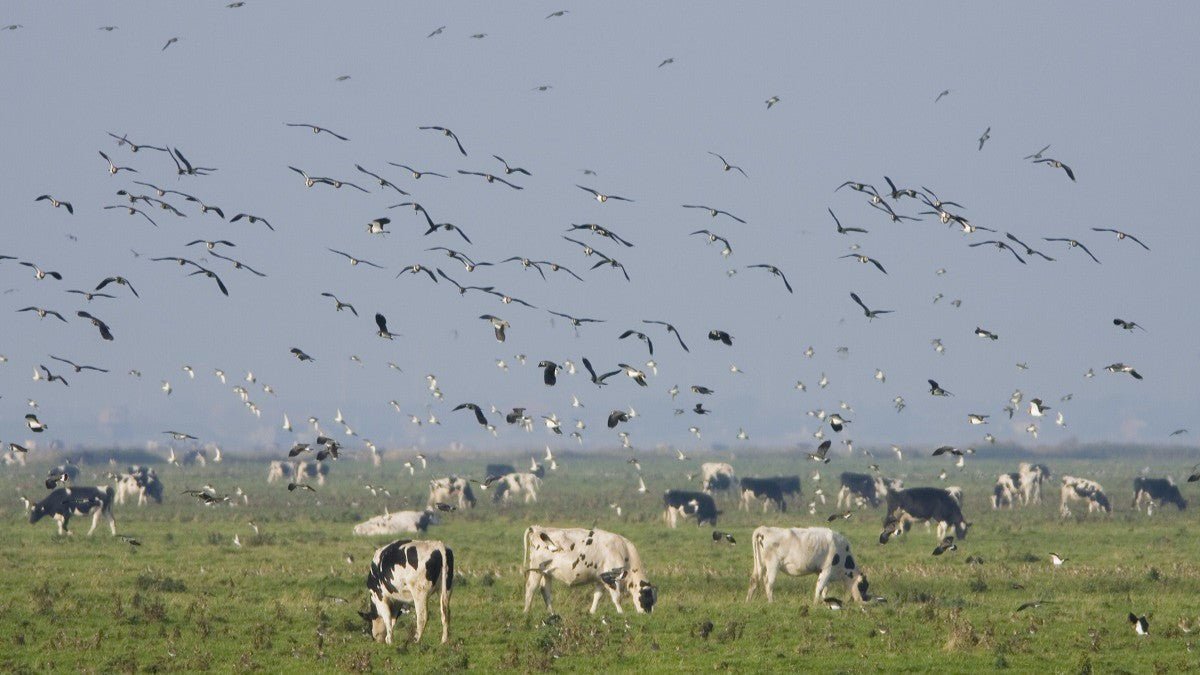
Salmonella is a serious dairy-farm biosecurity issue and wild birds can be part of the contamination pathway.
With Salmonella cases in New Zealand cattle rising, dairy farmers are being urged to stay alert for signs of the disease and strengthen farm biosecurity.
According to recent MPI laboratory data reported by Farmers Weekly, Salmonella cases across all strains increased from 455 in 2024 to 761 in 2025. While the number of individual animals represented by those laboratory cases is not known, the trend has prompted renewed concern across the dairy industry.
For farmers looking at ways to reduce potential biosecurity risks, one area worth considering is often overlooked:
Wild birds around feed, water and cattle areas.
Can wild birds spread Salmonella to dairy cattle?
Yes. Wild birds can potentially contribute to the spread of Salmonella on cattle farms by contaminating feed, water and the farm environment.
This does not mean wild birds are responsible for Salmonella outbreaks on dairy farms. Salmonella can enter and spread around a farm through several pathways, including infected animals, contaminated feed and water, people, equipment, rodents and other animals.
However, veterinary guidance identifies contamination of cattle feed and water by wild birds as a pathway associated with outbreaks of Salmonella Typhimurium on cattle farms.
That makes bird activity around feed storage, feed pads, troughs and other high-value areas worth taking seriously as part of a wider biosecurity strategy.
How could wild birds contaminate cattle feed?
The pathway is relatively simple.
A bird carrying Salmonella can shed bacteria in its faeces. If birds are regularly feeding, roosting or drinking around cattle facilities, those droppings can potentially contaminate surfaces, feed or water.
The pathway can look like this:
Wild birds
↓
Droppings contaminate feed or water
↓
Cattle ingest contaminated material
↓
Salmonella infection
↓
Bacteria can be shed by infected cattle
↓
Further contamination and spread around the farm
It is important to remember that this is one potential pathway, not the only one.
Why feed areas deserve particular attention
Birds are naturally attracted to food.
On dairy farms, that can mean large concentrations of birds around:
- Feed pads
- Silage and grain storage
- Feed bunkers
- Grain silos
- Calf-feed areas
- Dairy sheds
- Water troughs
- Feed-out areas
- Areas where spilled feed accumulates
The more attractive an area is to birds, the greater the opportunity for repeated bird activity and faecal contamination.
This is why bird management should form part of a broader farm biosecurity programme, particularly around feed and water.
Salmonella doesn't stop with the first infected cow
Once Salmonella is introduced onto a farm, controlling its spread can become much more complicated.
Dairy cattle can shed Salmonella, allowing contamination to move through the farm environment. Other potential transmission routes include contact between animals, contaminated equipment, people, feed, water and other animals.
Stress can also contribute to the development of clinical disease. Veterinary guidance identifies factors such as transport, calving, crowding and disruptions to feed or water as potential stressors associated with salmonellosis.
That means biosecurity isn't just about identifying sick animals.
It's also about reducing opportunities for pathogens to enter the farm in the first place.
What does Salmonella do to dairy cows?
Salmonellosis can cause significant health and production problems in cattle.
Clinical signs can include:
- Diarrhoea
- Fever
- Dehydration
- Reduced appetite
- Reduced milk production
- Abortion
- Severe illness and, in some cases, death
The disease can therefore have consequences beyond animal health, potentially affecting milk production, labour requirements, veterinary costs and overall farm performance.
Farmers should work with their veterinarian when Salmonella is suspected and follow appropriate testing, treatment and biosecurity advice.
Wild birds are only one piece of the biosecurity puzzle
It's important not to oversimplify Salmonella transmission.
Bird control alone will not prevent Salmonella.
Effective farm biosecurity needs to consider multiple potential pathways, including:
Cattle
Preventing introduction through infected animals and managing sick or shedding animals.
Wild birds
Reducing unnecessary bird access to feed, water and high-risk areas.
Rodents
Controlling rodents around feed stores, sheds and other farm infrastructure.
Equipment
Maintaining good hygiene and avoiding cross-contamination between areas.
People
Managing movement, footwear, clothing and equipment where appropriate.
Water and feed
Protecting feed and water from contamination and maintaining good storage and hygiene practices.
The goal is to reduce the number of opportunities Salmonella has to get onto the farm and spread.
What can dairy farmers do about wild birds?
Start by looking at where birds are spending time on the farm.
Where are birds feeding?
Spilled grain, silage and supplementary feed can attract large numbers of birds.
Where are they drinking?
Water sources can become gathering points for birds.
Where are they roosting?
Buildings, sheds, rafters and structures can provide convenient places for birds to rest.
Where are they nesting?
Persistent nesting sites can create ongoing bird activity and accumulation of droppings.
Are birds getting access to stored feed?
Protecting feed from wildlife is an important part of reducing potential contamination.
Then consider whether bird deterrents or exclusion measures could reduce bird activity in those areas.
Don't just control the birds. Control the attraction.
One of the most effective approaches to bird management is to look at why the birds are there in the first place.
If birds have an easy food source, simply adding a deterrent may not solve the underlying attraction.
Good bird management combines:
Attractant management
Reduce accessible food and water where practical.
Exclusion
Prevent birds from accessing specific areas where appropriate.
Deterrents
Use visual, laser, acoustic or other appropriate deterrents to make an area less attractive.
Consistency
Birds can become accustomed to predictable conditions, so deterrent programmes should be designed and managed accordingly.
Monitoring
Watch bird behaviour and adjust the approach when necessary.
Bird control as part of farm biosecurity
Wild birds are part of the natural farm environment and cannot simply be eliminated.
The objective is more practical:
Reduce unnecessary bird activity around high-risk areas.
If birds are routinely congregating around feed storage, feed pads or water sources, that activity deserves attention as part of the farm's wider biosecurity plan.
DairyNZ has identified effective rodent and bird control, particularly around feed bunkers and grain silos, as part of Salmonella prevention measures.
That's an important distinction.
Bird control isn't a replacement for good biosecurity. It's one tool within it.
A proactive approach to dairy-farm bird control
When Salmonella is a concern, it's easy to focus on what happens after an outbreak.
But biosecurity is fundamentally about reducing risk before a problem occurs.
That means looking at the farm environment proactively:
Where could contamination occur?
Where are birds congregating?
What are they accessing?
Can access be reduced?
Could bird activity around feed or water be better managed?
These questions can help identify opportunities to reduce potential contamination pathways before they become a bigger problem.
Don't overlook the birds
Wild birds aren't necessarily the cause of a Salmonella outbreak, but they can be part of the pathway.
With Salmonella cases in New Zealand cattle showing a concerning upward trend, it's worth taking a closer look at every potential route of contamination.
Protect feed. Manage water. Control rodents. Maintain good hygiene.
And don't overlook the birds.
Smart bird control can be one part of a smarter farm biosecurity strategy.
If wild birds are gathering around your dairy farm's feed, water or infrastructure, talk to the Birdzout team about practical bird-control options for your site.
Get in touch with our team

